


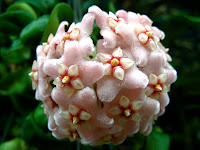


One of the plants I collect is the hoya or wax flower. To-date, I probably have more than 20 different species and cultivars and the numbers are continuing to grow. Just today, I bought another 3 plants from Woon Leng.
Hoya is a genus consisting of 200-300 species of tropical climbing plants belonging to the family Asclepiad and is mostly native to southern Asia, Australia and Polynesia. Hoyas are mostly evergreen climbing vines or shrubs with typically succulent leaves. One of the main characteristics of the flowers are the way in which they appear - mostly in axillary umbellate clusters at the apex of the peduncles, with repeated clusters of flowers developing sequentially on each peduncle. Each flower is about 1 cm in diameter with five thick, waxy petals. Most have flowers which are sweetly scented and produce abundant nectar. Some species are grown mainly for their attractive foliage which can range from variegated to bright red leaves particularly when grown in sunlight (i.e. Hoya obscura).
Most nurseries in Singapore sell hoyas as trailing/climbing vines in hanging pots. In the wild, they tend to be found on the trunk and branches of trees in the forest, often forming a massive vine around the trunk. Collectors would usually get their supply either directly from the supplier through online transactions or at plant sales/conventions such as the recent Singapore Garden Festival. These are usually sold as cuttings which can be rooted or unrooted.
Hoyas are probably one of the easiest plants to grow. In fact, it is one of the few plants which does best when ignored, just like Tillandsia (air plants). In terms of cultivation, it is relatively easy to grow hoyas from cuttings. Usually, try to use a cutting which has two or three leaf nodes. The leaves from the bottom node should be removed. The end of the cutting should be dusted with rooting hormone powder (available at most nurseries) before burying it in a potting mixture with good drainage. The ones in Singapore are planted in a mix of perlite, vermiculite, wood chips and sphagnum peat moss, although I have seen some potted in just normal soil. Hoyas should be watered thoroughly but it's best to let the soul completely dry out between waterings. Water thoroughly and let the soil dry out before watering again.
Hoyas prefer bright sunlight as opposed to direct sun. As they are true tropicals, they prefer high humidity. They are generally light feeders and do not require too much fertiliser.
Commonly associated with Hoyas are its relative, the
Dischidias . There are about 80 known species which all grow as epiphytes and are native to tropical areas of China, India and most areas of Indo-China. Dischidia are closely aligned with the sister genus Hoya. Unlike Hoya, the genus Dischidia, is poorly known and has not been studied as closely.
Most Dischidia grow in arboreal ant nests of different species and some have developed a symbiotic relationship where the plant has developed modified leaves to either provide housing or storage. Of these there are two types of modification to the leaves. Three species develop bullate leaves which are hollow root-filled structures. These are Dischidia complex Griff, Dischidia major (Vahl) Merr. and Dischidia vidalii Becc. Both produce normal leaves in addition to the bullate leaves. These bullate leaves are formed when the outer margins of a leaf stop growing while the center of the leaf continues to grow. As time progresses the leaf margins curl under to close the gap which creates a small hole. A number of species develop imbricate leaves which hold tightly to the growing surface. The underside of the leaf has a space which is filled with roots that the ants take advantage of.
Hoyas and dischidias are available in most nurseries across Singapore, though some have a lot more than others. A good starting place for hoyas would be
World Farm at Bah Soon Pah road. Collectors would usually go to
Woon Leng as they do have quite a large collection of hoyas. For the ultra rare species, one would need to either import them or procure them from other private collectors. Some of the rarer hoyas I have are the Hoya imbricata, Hoya retusa and the holy grail of hoyas, the Hoya spartiodes.
For more information on hoyas, do check out
Tipol Ruangaksorn's website . He is a serious collector of hoyas with some 250 different ones in his collection. His website contains a very comprehensive list of hoyas species and hybrids which serves as a very good ID guide. I also chanced upon a
hoya blog and although defunct, it still is an interesting read with lovely photos of hoyas.
If you want to order hoyas online, you can check out this
website which ships from Florida to anywhere in the world.
For hoya care, check out
Molly's Tropical Plants .
For more general reading, here are some other online resources:-
a.
the Hoya Page b.
Dischidia

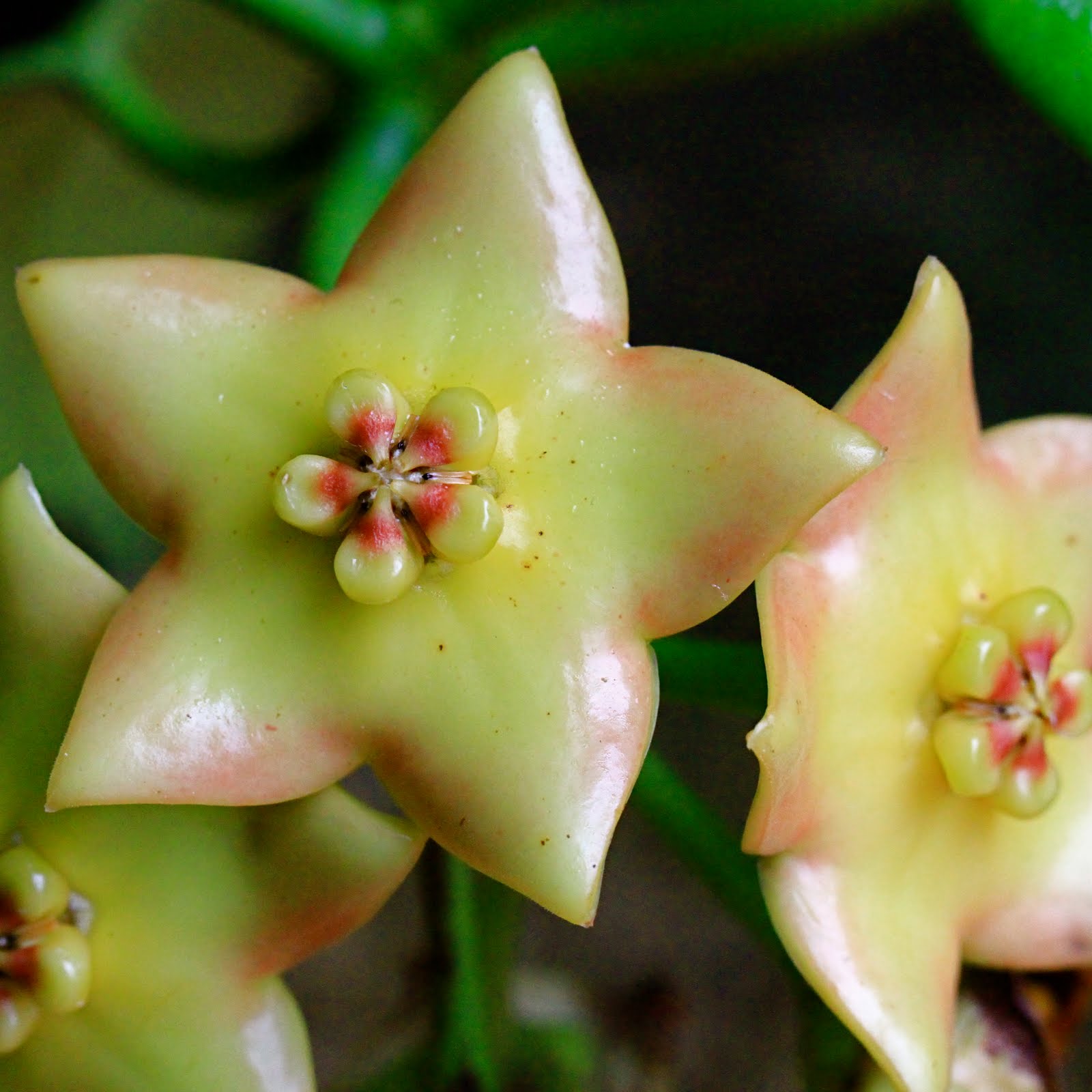


 Got these new hoyas from Woon Leng. I don't know what they are yet but will no doubt look it up. The 1st row is a hybrid while the 2nd and 3rd are species. To-date, I have 27 different hoyas and counting. It's a slow but steady collection.
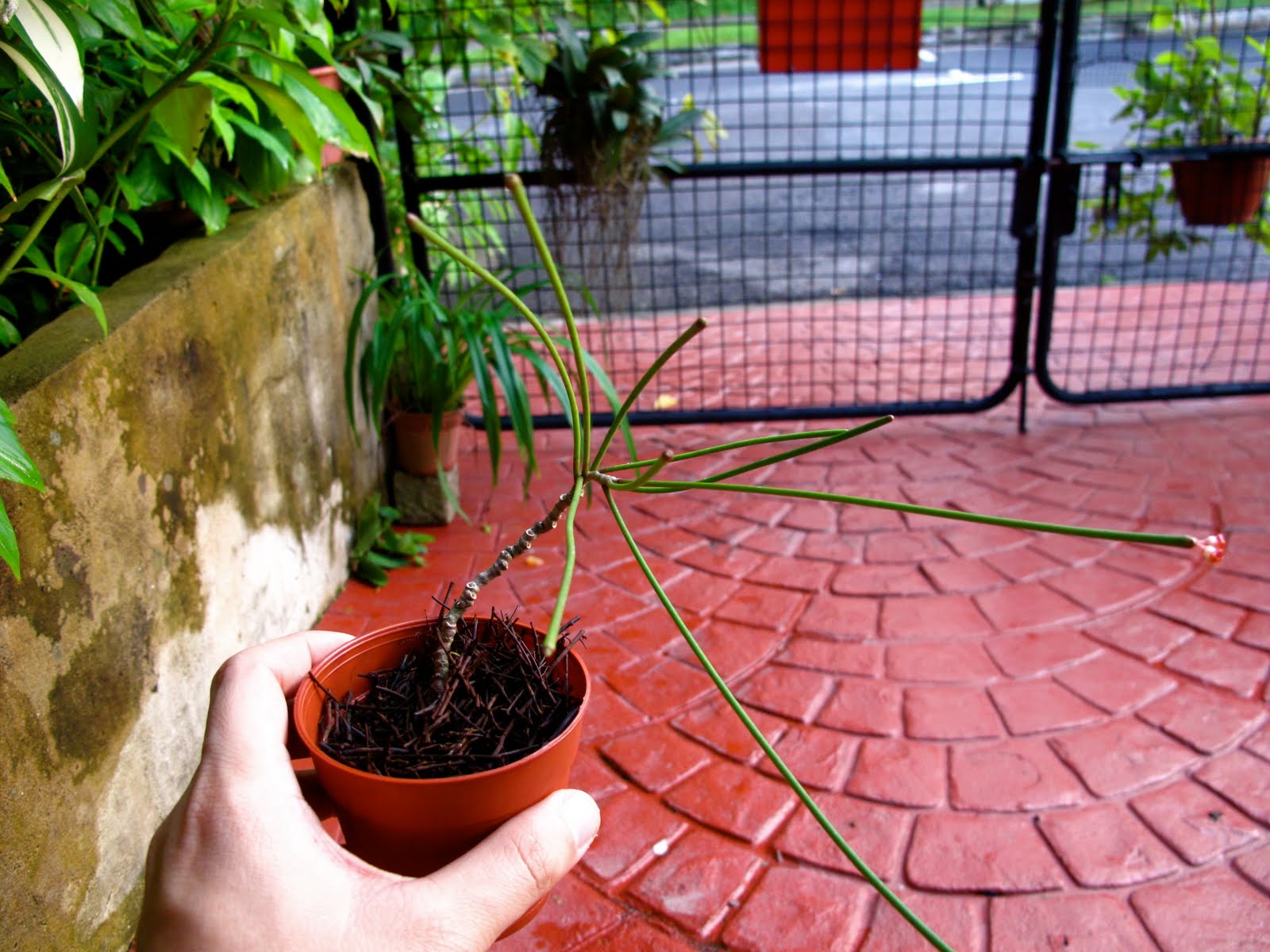 The Hoya spartiodes, I was told, is one of the rarest hoyas in the hoya kingdom and is therefore every hoya collector's ultimate prize. It may not look like much, but it is truly an unusual hoya. This species is found in the south of Borneo and has been recorded in Sabah and Kalimantan. Although considered a hoya, it is sometimes placed in its own genus, Absolmsia (spartiodes). This plant has no leaves and the green tips are actually the peduncles.


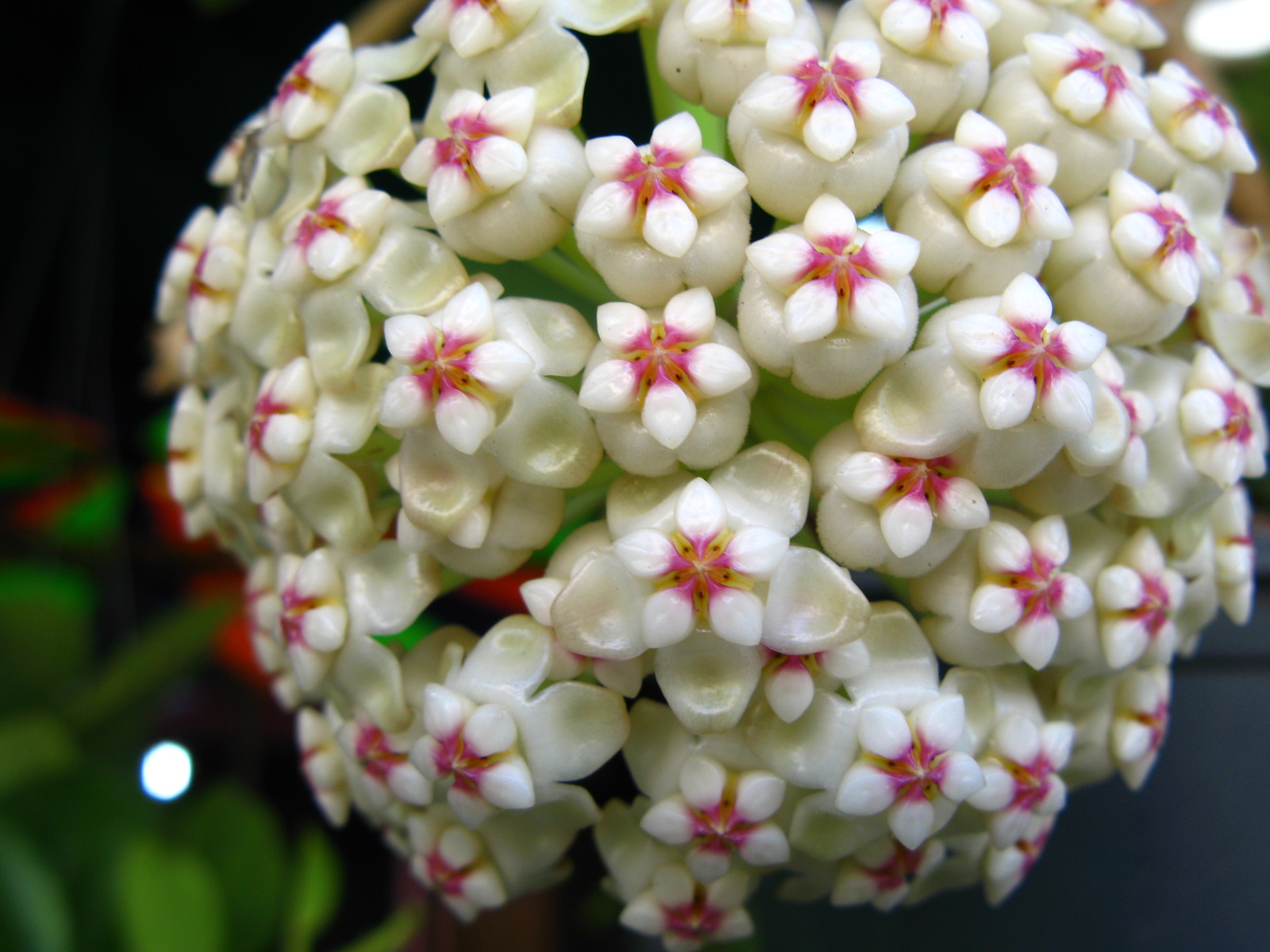


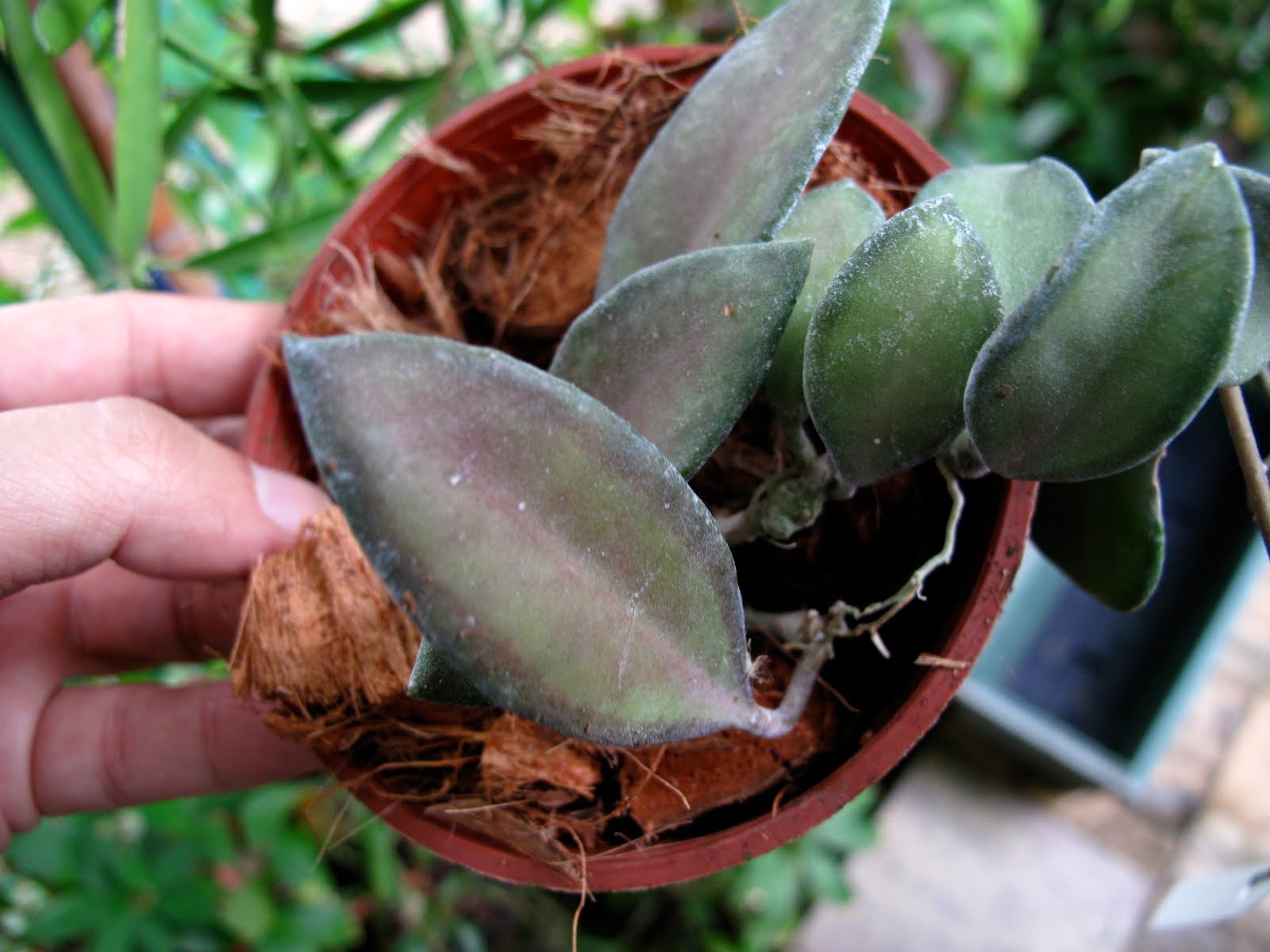


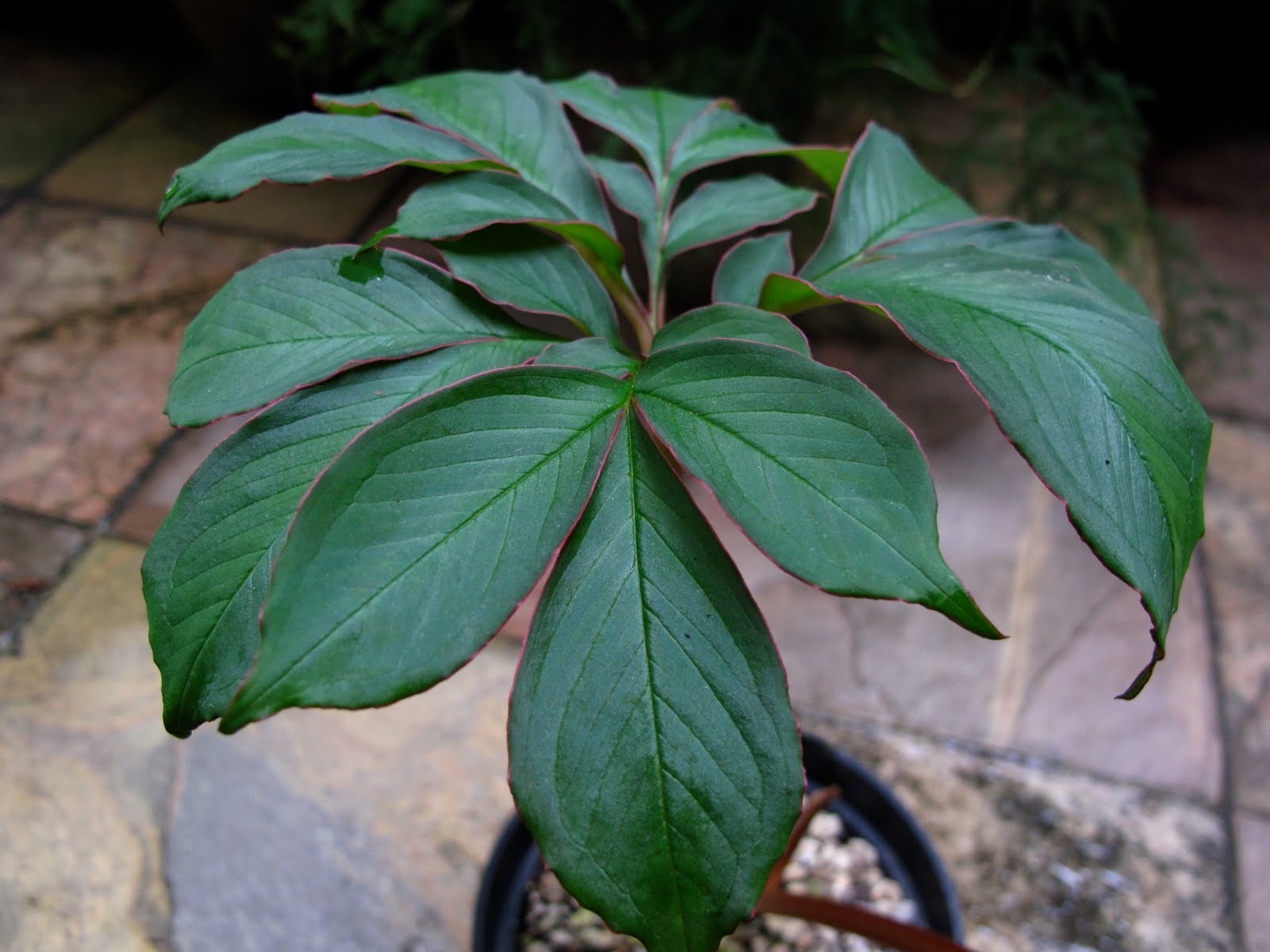
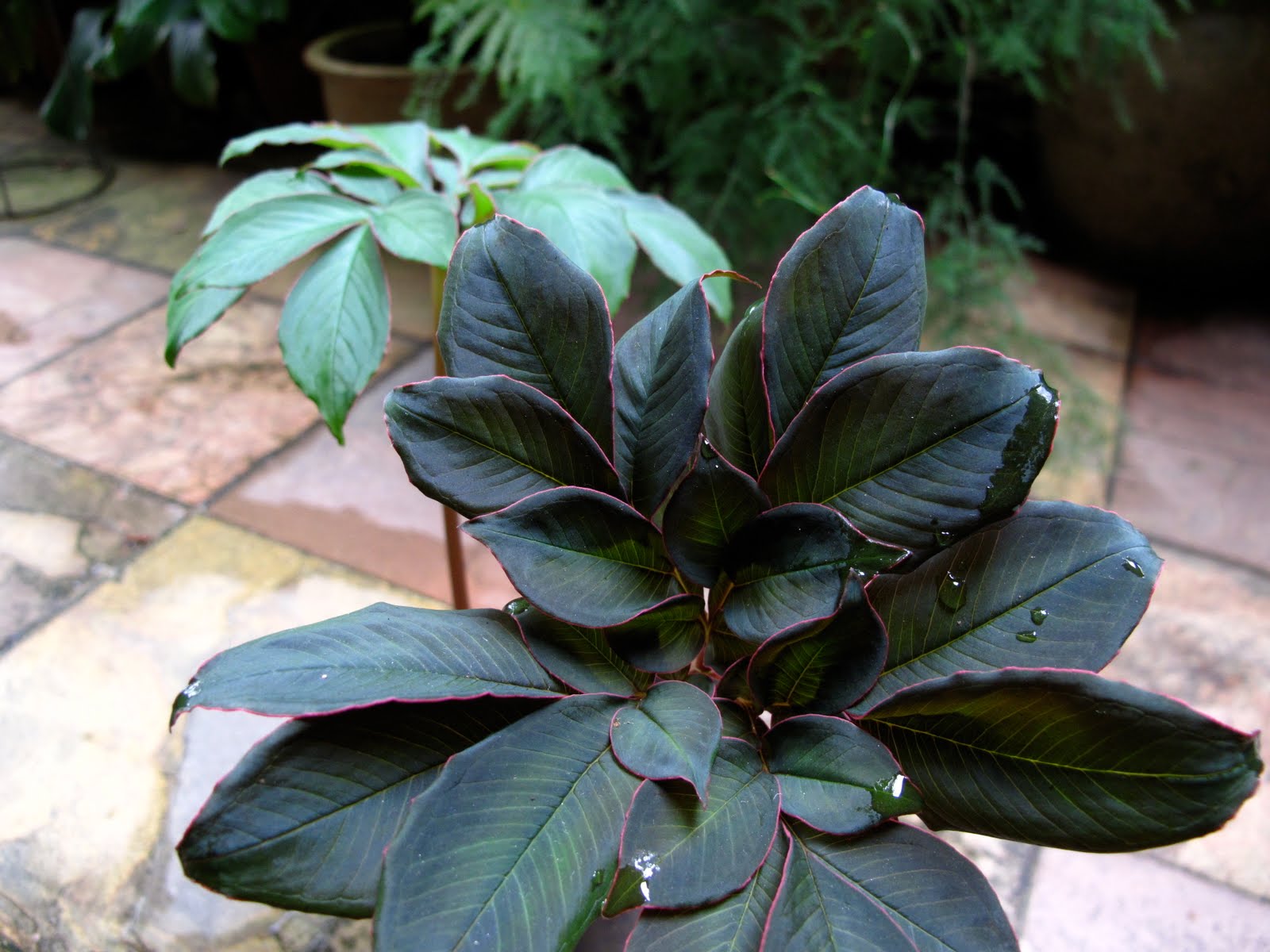

 I don't consider myself to be a die-hard hoya fan, but I do appreciate these plants for their unique flowers whenever they are in bloom. The H. mindorensis is possibly one of the more unusual hoyas around. Although their leaves are not particularly spectacular, the flowers are quite a sight to behold, albeit small. However, my favourite hoya has to be the H. obscura, not just because of it's purplish green fleshy leaves but more for its intense fragrance. It is certainly a plant to grow in a scented garden, along with various other fragrant plants like jasmine, rangoon creeper, gardenia, ylang ylang and the fiddlewood.


